

Are you missing one or several teeth?
Are you missing one or several teeth? Maybe you’ve been living with a gap for years, avoiding certain foods or hiding your smile in photos. You don’t have to keep living that way.
A dental bridge is a customizable set of prosthetic teeth that will fill the gap in your smile. The adjacent teeth support a traditional dental bridge. However, for a complete solution to tooth loss, a dental bridge can be fixed into place using dental implants.
At Design Dental in North Liberty, we offer a full range of tooth replacement options for patients with missing teeth. Dr. Trish Schminke and Dr. S. Jeremy Tu are committed to providing personalized, high-quality restorative dentistry. Our dentists take a comprehensive approach to your care to ensure long-lasting, natural-looking results.

Benefits of Dental Bridges
Dental bridges offer a reliable mix of beauty and function. A custom bridge can:
- Restore chewing ability: You can eat a wider variety of foods with confidence.
- Improve speech: Missing teeth, especially in the front, can affect how you speak. A bridge helps you talk clearly again.
- Prevent teeth from shifting: A bridge fills the gap and keeps your remaining teeth in their proper positions.
- Maintain your facial shape: Missing teeth can cause your face to look sunken, but a bridge helps support your facial structure.
- Stay fixed and secure: Unlike removable dentures, a bridge stays in place and feels natural.
- Last for years: With good care, a dental bridge can last 10 to 15 years or longer.
- Look natural: Bridges are custom-made to match the color and shape of your natural teeth.
Traditional vs. Implant-Supported Dental Bridge
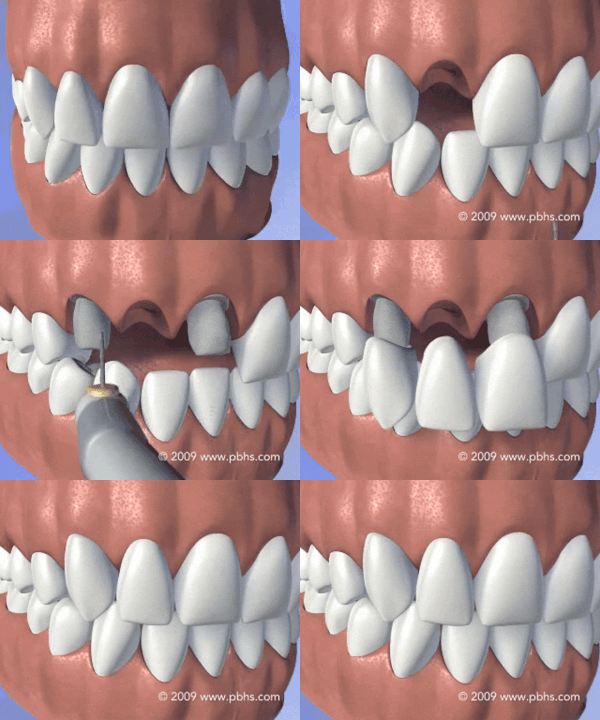
Traditional Dental Bridge Procedure
For patients with missing teeth, we often recommend visiting our North Liberty dental office for a consultation. During your consultation, our dental team can assess the condition of your teeth, jaw, and gums to determine which tooth replacement option will best suit your needs.
For Traditional Dental Bridges:
- First, your dentist will reshape the surrounding teeth to prepare them for the dental crowns.
- Then, they will take digital impressions of your teeth to help design a dental bridge that fits comfortably and appears natural in your mouth.
- Next, we will send your impressions to a local dental lab. An experienced technician will create your custom dental bridge.
- Once your dental bridge is complete, your dentist will carefully secure your dental bridge to your teeth.
For Implant-Supported Dental Bridges:
- An oral surgeon will perform the surgical phase of the implant surgery.
- 3-6 months later, once the implants have fused with the jaw bone, your dentist will place your abutments and take digital impressions of your smile.
- We will send your impressions to a local dental lab for the fabrication of your custom dental bridge.
- Once your dental is ready, your dentist will secure it to your dental implants.
Patient Review
“All personnel are caring professionals who take time to listen. Their approach to forming my dental care plan was efficient and effective. I was impressed by the technology that can even make X-rays comfortable.”
-Susan V.
Dental Bridges FAQs
Dental bridges replace one or multiple consecutive teeth. Read the answers to these frequently asked questions to learn more.
What types of dental bridges are available?
There are several types of bridges. The right one depends on where the missing tooth is and what support is available:
- Traditional bridge. This is the most common type. It uses crowns on the teeth on both sides of the gap for support.
- Cantilever bridge. This bridge is supported on only one side. We only recommend this bridge when there’s only one adjacent tooth available for support.
- Maryland bonded bridge. This type uses a metal framework attached to the back of nearby teeth. It may be used when a more conservative option is appropriate.
- Implant-supported bridge. This type is anchored to dental implants instead of natural teeth. It can be a strong option when multiple teeth in a row are missing.
Does getting a dental bridge hurt?
The process of getting a dental bridge is generally not painful. We use local anesthesia to numb the area during preparation of the supporting teeth. After the procedure, you may experience some discomfort or sensitivity, but this is typically temporary. Our office will recommend over-the-counter pain relievers.
How long do dental bridges last?
Dental bridges are designed to last 10 to 15 years, depending on the materials used and how well you care for them. However, with proper oral hygiene, regular dental checkups, and avoiding habits like grinding your teeth, your bridge can last for many years.
Can I eat normally with a dental bridge?
Yes, you can eat most foods with a dental bridge, though it’s important to avoid hard or sticky foods that could damage the bridge or cause it to come loose. After getting a bridge, you may need to adjust to how it feels while chewing, but with time, you should be able to eat comfortably.
Will a dental bridge affect my speech?
Once it is in place and fully adjusted, a dental bridge should not affect your speech. Initially, you may need some time to get used to the new appliance, but with practice, you should be able to speak clearly. A dental bridge restores the functionality of your teeth, allowing you to speak and chew properly.
Does insurance cover dental bridges?
Dental bridges are often covered by dental insurance, though coverage depends on the specifics of your plan. Some insurance policies may cover a portion of the cost, while others may not cover cosmetic procedures. It’s a good idea to check with your insurance provider to understand your coverage and any out-of-pocket costs.
Schedule Your Dental Bridge Consultation
Are you ready to replace your missing teeth and restore your smile? Dr. Tu and Dr. Schminke are here to help. We’ll examine your teeth, discuss your options, and create a treatment plan that fits your needs.
To schedule an appointment, call (319) 284-4361 or request an appointment online. We proudly serve patients from North Liberty, Cedar Rapids, Iowa City, and the surrounding communities.