

Gums that bleed when brushing or flossing can be an indication of developing periodontal disease. It is one of the most common dental concerns that should not be taken lightly. Seeking treatment for bleeding gums is essential to avoid the progression of the disease and more complex dental concerns. Dr. Tu offers comprehensive diagnosis and dental care for gum disease in our North Liberty dental office.
Our team screens for the early signs of gum disease during routine dental visits to help you maintain gum health.
What is Gum Disease?
Periodontal or gum disease is an infection of the gum tissues that stems from bacteria in the mouth. Poor oral hygiene, certain medical conditions, or a genetic predisposition can enable bacteria to remain on teeth and gums, creating a sticky substance called plaque.
Over time, this can harden into tartar and impact the health of the gum tissue, causing it to break down and pull away from the tooth roots. Poor gum health can also lead to an increased risk of tooth decay and cavities.
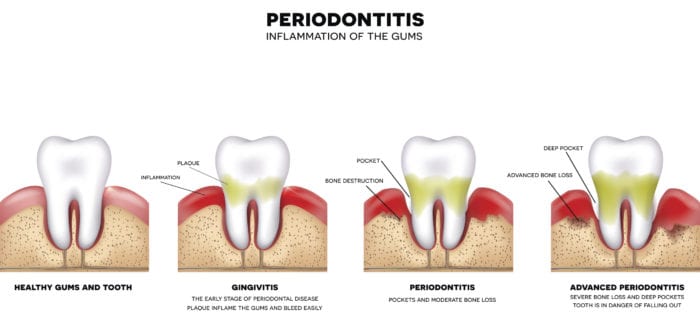
Gum disease is also called a “silent disease” because most patients do not realize they have it until it is identified during routine visits, or it leads to bigger problems, such as increased tooth sensitivity, loose teeth, or changes in the fit of the bite. It is also progressive in nature, developing slowly and over time, so that changes can often be subtle until they are more complex.
The gums serve two important roles in both oral and overall health, which can become compromised when gum disease progresses. The gums provide a stable, nurturing environment for the teeth and also help prevent bacteria in the mouth from entering the bloodstream.
Poor gum and oral health have been linked to an increased risk of developing inflammation-related diseases and conditions, including cardiovascular disease and systemic conditions. If you have an existing disease or are diabetic, maintaining healthy gums will support disease management.
Gum Disease Stages
Gum disease is a progressive condition that occurs in stages. The longer you leave gum disease untreated, the more the severity increases.
Gingivitis
This is the first, most common stage of gum disease, and is the only stage that’s reversible. It happens when a sticky film of bacteria called plaque builds up at the gumline. This irritates the gum tissue, causing bleeding and inflammation. Almost all adults experience this stage at some point. The symptoms are mild and usually aren’t painful, making it difficult for patients to notice that they have it.
You may notice that your gums are redder and bleed easily, particularly when you’re brushing or flossing. You may also notice that you have persistent bad breath or that your gums are a bit tender. However, at this stage, the infection hasn’t reached the bone or connective tissues that hold your teeth in place.
Diligent oral healthcare is usually enough to reverse gingivitis. We may recommend that you use an antibacterial mouthwash or a specific kind of toothpaste that’s optimal for gum health. You may also need to come into the office more often to get professional dental cleanings.
Mild Periodontal Disease
At this stage, the condition is no longer reversible. When you don’t remove plaque with regular dental care, it hardens into tartar. Tartar can’t be removed with just brushing and flossing. It requires specialized dental tools to scrape it off the teeth completely. The infection then starts to spread beyond the gumline, attacking supportive bone and tissue.
You may experience more bleeding than before and notice some discomfort while chewing. Your gums start to recede and pull away from the bone and teeth. Pockets form between the gums and teeth, trapping more food debris and bacteria, worsening the infection.
A deep cleaning treatment called scaling and root planing is used at this stage. We clean out the gum pockets, removing food particles and bacteria. Then, we smooth down the tooth roots, enabling the gum tissue to reattach to the bone. We may also recommend localized antibiotic therapy.
Moderate Periodontal Disease
At this stage, the bacteria continue to attack the gum tissue and bone. Since you’re losing more bone, the gum pockets become deeper, trapping even more bacteria. Your gums may recede further, exposing your tooth roots and causing sensitivity when you’re eating or drinking hot or cold things.
Symptoms become more noticeable. You have persistent bad breath, and your gums become very tender. It can cause discomfort when eating or speaking. You may also notice that your teeth have started to loosen due to the loss of the supportive tissue. Scaling and root planing are still used at this stage, albeit more intensively. We’re also more likely to explore antibiotic therapies.
Severe Periodontal Disease
At this point, damage is irreversible, and the bone and supporting tissues are severely impacted. The structures that hold your teeth in place are much weaker, and you have significant gum recession. At this stage, your teeth may loosen, shift, or even fall out.
Other symptoms include severe pain when chewing or speaking, and chronic bad breath that can’t be helped. Your gums ooze pus and blood, and there are changes in your bite. Since we can’t reverse the damage, we focus on saving your teeth and getting the infection under control.
The only things that can help the condition at this stage are gum surgery or laser periodontal treatment. You may also need bone grafts to make up for jawbone deterioration, and you may require tooth extraction if the symptoms are too severe.
Treatment for Bleeding Gums
Dr. Tu will thoroughly evaluate the condition of your gums and overall dental health as part of a comprehensive approach to a diagnosis and treatment plan. There is a range of options for addressing the symptoms and effects of gum disease. A recommended treatment will depend upon the stage of gum disease and any damage. Dr. Tu offers periodontal therapy in North Liberty as a first option to treat bleeding gums.
Treatment can range from simple changes in your daily oral hygiene to intensive cleanings or even gum surgery if periodontitis is present. Dr. Tu will present all options and discuss what to expect after your exam.
Patient Review
“The staff here was so friendly! I went on very nervously because my teeth were bothering me, and my gums were bleeding, and everyone there made me feel much more comfortable! Highly suggest Design Dental!!”
-Maggie H.
Bleeding Gums FAQs
Bleeding gums can signal a severe oral health issue. Know what to look for. Reading the answers to these commonly asked questions can help.
Is it normal for gums to bleed when brushing or flossing?
While occasional light bleeding might happen when starting a new flossing routine, frequent or heavy bleeding is abnormal. It’s usually a sign of gum inflammation or early gum disease. Brushing too hard or using a hard-bristle toothbrush can also irritate the gums. You should consult our office if the bleeding persists for more than a few days.
Can stress cause bleeding gums?
Stress can negatively impact your immune system, making it harder for your body to fight infections like gum disease. People under stress may also neglect their oral hygiene or engage in habits like smoking or teeth grinding, which can contribute to gum problems. Elevated cortisol levels may also increase inflammation throughout the body, including the gums. Managing stress through healthy habits can help reduce the risk.
Can bleeding gums be a sign of something serious?
Bleeding gums can be a warning sign of periodontal disease, eventually leading to tooth loss. Additionally, persistent gum bleeding may indicate systemic conditions such as diabetes, leukemia, or a blood-clotting disorder. It could also be linked to vitamin deficiencies or side effects of certain medications. If gum bleeding is frequent or unexplained, seeking evaluation is important.
How does flossing help bleeding gums if flossing sometimes causes the bleeding?
If your gums bleed when you first start flossing, it’s usually because they are inflamed due to plaque buildup. As you continue to floss daily, the inflammation should decrease, and the bleeding should stop. Proper flossing removes food particles and bacteria from between the teeth and under the gumline. Consistency is key to seeing improvement.
Are bleeding gums reversible?
In many cases, bleeding gums due to gingivitis can be reversed with good oral care. This includes proper brushing and flossing, professional cleanings, and using mouthwash to reduce bacteria. However, if the problem has progressed to periodontitis, more intensive treatments may be needed. The earlier you address the issue, the better the chances for full recovery.
How can I stop my gums from bleeding?
Improving your oral hygiene routine is key—brush gently twice a day with a soft-bristled toothbrush and floss daily. Use an antiseptic mouthwash to reduce bacteria in the mouth. Avoid tobacco products and eat a balanced diet rich in vitamins. Regular dental cleanings can also help remove plaque and tartar that brushing alone can’t reach.